Documentary a Day: Chevolution (2008)

Directors: Luis Lopez, Trisha Ziff

Chevolution is a documentary about the most reproduced image in the history of photography: the Guerrillero Heroico image taken by Korda (and is one of three about the image)  The film is an in depth look at the origins of the iconic  photo and of Che himself.  The image is contextualized from the event that it was taken all the way to the broader discourse on its subsequent commercialization (for example there are a republican and a libertarian wearing Che shirts to “demonstrate how the shirts are made possible by capitalism).

The image was not initially even printed in Cuban news papers, but was first widely circulated by Feltrinelli and later made into a more pop-art style by Fitzpatrick.  Its mass appearance coincided with events like May 68′ amongst other uprisings that were going on in the time around the world.

There are some problems with the documentary, for example there is a long segment about how people don’t realize the “violent nature” of Che, or how his ideas lead to a “totalitarian dogmatic state” without an adequate counter-argument by people who appear in the documentary who clearly sympathize with Che.  Those more sympathetic with the potential of Che are more portrayed as idealists instead of Marxists, although perhaps that is implied by their sympathies.

The co-optation of rebellion, a popular topic amongst the more cultural Leftist theory, is dealt with throughout the film (even with a reference to Marcuse).  The interesting thing here is that the “culture industry” theories of the Frankfurt school seem to apply even to the Leftist reproduction of Che’s image.  What I mean by that is that the original mass production of the famous image were almost the reverse of the co-optation  that we subsequently saw with the commercialization of Che’s image.

The film does an excellent job at examining the origins and meaning of the image from various different perspectives, and takes it very seriously.

Documentary a Day: The Take (2004)

Director: Avi Lewis

The Take is a documentary that follows the phenomenon of worker takeovers of factories in Argentina towards the beginning of the 2000s.  The film goes through the historical conditions that lead to crisis in Argentina and how Neo-Liberal market reforms totally devastated the country long before the economic crisis that would eventually come home by the end of the decade.  The response by many workers in Argentina was to “fire the boss” and run factories and resume production as collectives, not organized along capitalist lines.  Not only is the class consciousness of the workers themselves in Argentina demonstrated in a very positive light here, but the communities in which factories like the one featured in the film tend to fully back the workers efforts.

Argentina at the time was in a political uproar, and in the midst of a Presidential election that resulted in a social democratic government that remains today.  The workers movement, as documented in this film, began to respond to the crisis by fighting back and taking matters into their own hands.  They were more than willing to fight back police attempts to retake the factory, and interviews with the factory owner reminded me of a scene in Godard’s Tout Va Bien where the boss tries to justify capitalism and property against a worker uprising (which resulted in the boss being kidnapped in that film).

The documentary does take a “libertarian socialist” stance on the phenomenon, claiming that it is an example of how spontaneous actions by workers are preferable to organizations like Communist parties, which of course Leninist would not agree with.  But all Leftists alike can acknowledge that the film does have a very optimistic tone about workers’ power.

Documentary a Day: Herbert’s Hippopotamus (1996)

Director Paul Alexander Juutilainen

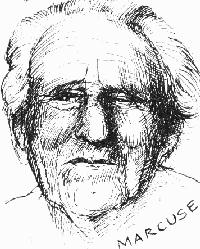
Herbert’s Hippopotamus is a film about the New Left philosopher Herbert Marcuse.  The film details his coming to the USA and his experiences while he was teaching a UC San Diego in California.  Marcuse reached a high level of fame in California and around the world for his role in the student and radical movements of the 1960s and 1970s (although his involvement as a Marxist theorist goes all the way back to the German Revolution towards the end of WWI).  His most notable student was Angela Davis, who is featured throughout the film quite often, recounting her experiences with Marcuse.  His celebrity-like status would remind a contemporary viewer of Slajov Zizek, although Marcuse was much more active in social movements even though he remained an intellectual the whole time.

In the film and and subsequent reviews, he is often accused of being a Communist, although it’s “cleared up” that he never joined the Party, although he did remain a Marxist and employed a Marxist analysis of his critique of industrial society (including the USSR).  His politics made him have enemies in high places, including the American Legion (which already has a bad history with the Left), and Ronald Reagan: who was for removing Marcuse from his position.

The film is an interesting account of a radical thinker of the 1960s who had a complicated relationship with the college he worked at, and capitalist society at large: of which he was a major critic.

At the time of this posting, the film can be viewed in its entirety on Google Video or YouTube:

Google Video

Further viewing:

A lecture by the co-editor of Marcuse’s selected writings – YouTube

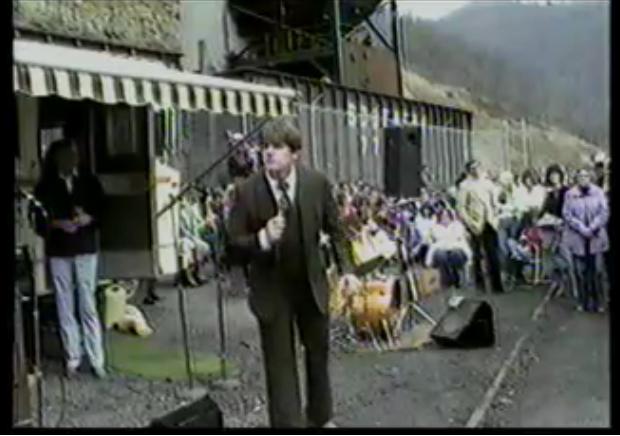
Documentary a Day: Mine War on Blackberry Creek (1986)

Director: Anne Lewis

This short (around half an hour) documentary is about a strike by West Virginian coal miners that got violent in the early 1980s.  It should be of interest today as some of the main players of the strike continue to make national news headlines: Richard Trumpka, who is now the president of the AFL-CIO, and Don Blankenship, Massey Energy CEO who got national headlines when a mine operated by Massey exploded a few years ago, killing many workers inside.  Massey Energy also engages in a lot of “mountain top removal” which has become quite a contentious issue in West Virginia, for workers, environmentalists and the coal industry.

This documentary accounts for a strike that got violent and was a very important event for the union movement of West Virginia (the unions have consistently been busted since).  Interviews with striking workers, and scabs that were brought in either from other states or interestingly were local police before the strike, are contrasted throughout the film.  The class consciousness of the striking workers is quite high, the violent history of West Virginia’s labor disputes remains an important lesson for them throughout these interviews.  It’s also interesting to note that a high level of solidarity with South African workers is kept with the striking workers who are well aware that Massey is exploiting workers on an international scale and that solidarity is important if they wanted to have a fighting chance.

Another interesting part of the documentary are the interviews with Don Blankenship and the scab workers.  Blankenship makes similar arguments as a boss of a profit-making corporation that the fictional boss in Godard’s Tout Va Bien makes to not only justify his company’s position against the workers, but to defend capitalism itself.  The scabbing workers often either are visibly uncomfortable about the backlash by the community and striking workers and are very open about the fact that they regret what they’re doing, or their excuses rest on relatively empty notions of “freedom” and the “right to work.”

This short film demonstrates the aspect of coal mining that is all too often left out of the current debate on moutain top removal, and reminds me of a Monthly Review article titled “What Every Environmentalist Needs to Know About Capitalism” that links these two important subjects.

The documentary can be viewed in its entirety here: http://appalshop.org/film/minewar/stream.html

Links of interest:

Monthly Review Article – on strikes in West Virginia which includes the one this documentary is about

Ambush at Keystone – An account by Maoist Mike Ely about his invovlement in a wildcat strike in West Virginia in the 1970s

Matewan – A late 1980s film about earlier labor disputes in West Virginia.

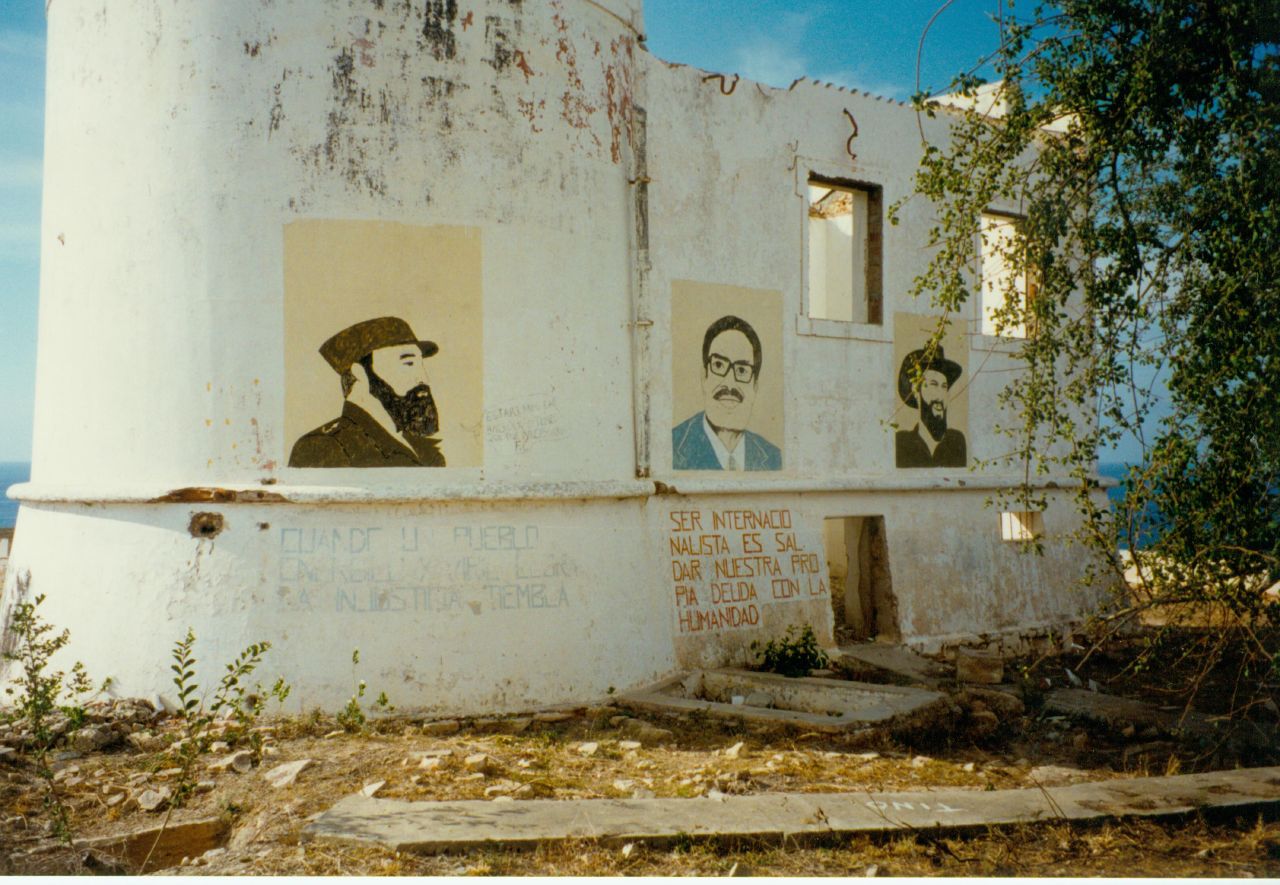
Documentary a Day: Cuba! Africa! Revolution! (2007)

Director: Jihan El Tahri’

Also known as “Cuba, an African Odyssey”

This documentary offers an excellent account of Cuban involvement in Africa.  The documentary accounts for a long period in this “Chapter of Cold War history” (thus is too much to sum up in one post here).  The documentary is in two parts and covers the time from when Che first went to Africa to help with the conflict in the Congo all the way until the fall of Apartheid.

(Image from Wikipedia)

The documentary also does an excellent job at contextualizing Cuba’s involvement as an anti-imperialist endeavor.  It is very sympathetic and honest about the fact that Cuba was instrumental in ending colonialism in Africa (especially via Cuba’s invovlement in Angola) .  It’s hard to explore this topic and not come to the conclusion that Cuba’s involvement in Africa was anything but liberating to the people of Africa.

The most interesting thing about the documentary is its account for the relationship between the USSR and Cuba in the context of involvement in Africa.  The documentary portrays the USSR as not really wanting to get too involved in Africa for various diplomatic reasons, yet Cuba was the driving force here.  Cuba was acting independently and even trying to use its relationship with the USSR to help liberate Africa from colonialism by playing cold war politics very intelligently.  This certainly dispells the myth of “all allies of the USSR just took dictates from Moscow” as Cuba, in this case, was the real driving force.

I highly recommend this documentary to those interested in Cuba and anti-imperialist struggles in general.

Further Reading:

Africans call for BBC to screen “Cuba! Africa! Revolution!”

(Edit: the original publishing of this I was under the impression that this was a BBC documentary, which it is not.  I have edited the post to reflect this)

Documentary a Day

So far, this site has focused mainly on narrative fiction films.  This of course leaves out a major section of films that are of great interest to the Left: documentaries.  Posts here tend to sum up films and do a small amount of analysis when possible of these films.  Doing the same with documentaries may be a little redundant, so the posts on documentaries will tend to be shorter: sort of a collection of highlighted documentaries, what they’re about, why they’re of interest to the Left, and why you should check them out.

I will add a documentary a day for the next few days, thus starting the first Documentary a Day series at Waiting for Lefty with Cuba! Africa! Revolution!

Bookmark and Share

The Trotsky (2010)

Director: Jacob Tierney

When I started this site, I never thought I’d be writing about a teen comedy in the project to document, analyze, and display films with strong Leftist themes.  But after seeing the film The Trotsky, that had to change.  A teen comedy filled with references to the Spanish Civil War, a Ken Loach retrospective.  Its director described it as “Reds in high school that makes you laugh” (YouTube video)

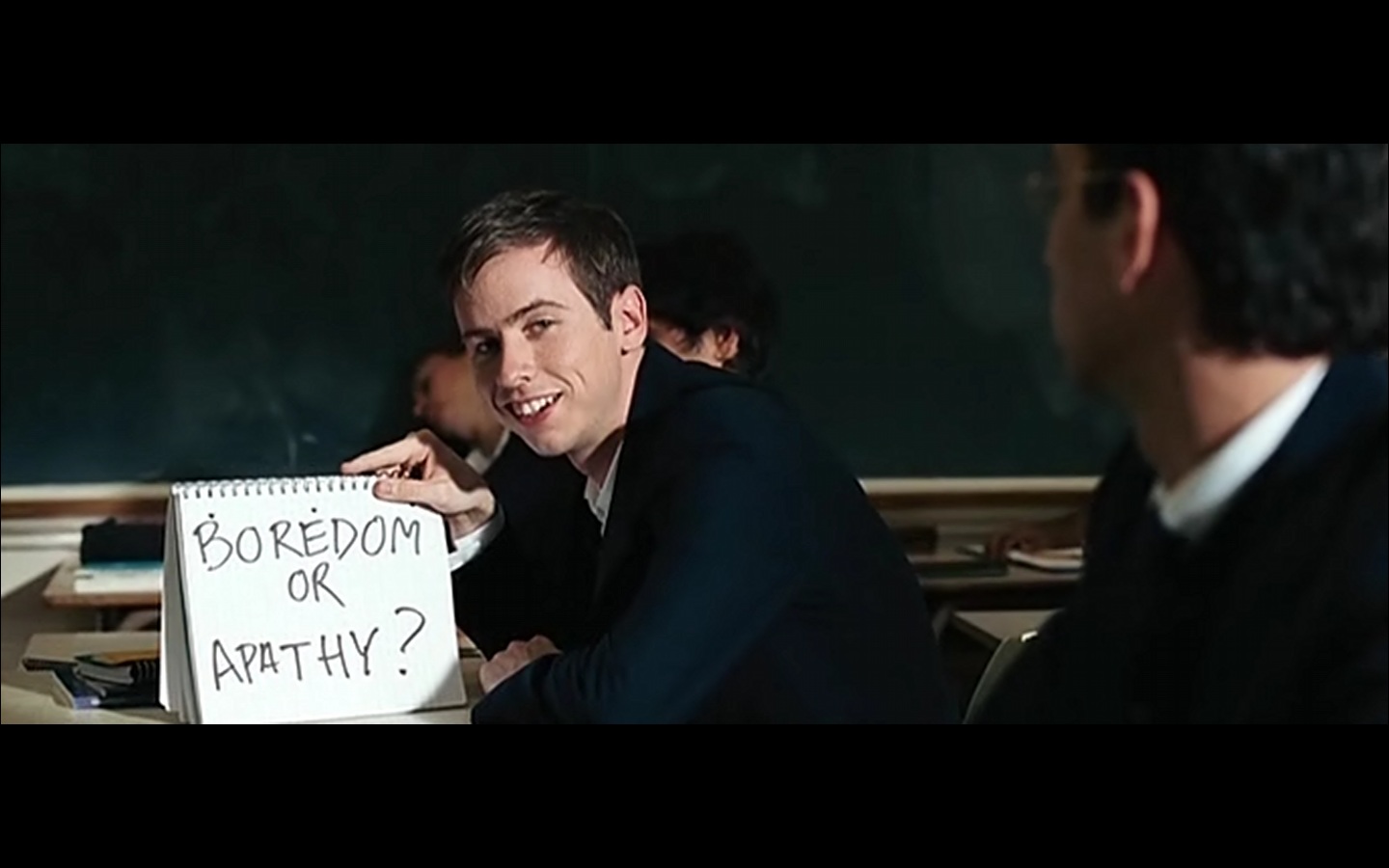
Boredom or Apathy?

The film has a very bizarre premise: the main character Leon believes that he is the reincarnation of Leon Trotsky.  And to top that off with being a teen film, it was certain to make for a strange film (which isn’t to say a bad film).  The main conflict (or contradictions) in the film revolves around the main character trying to live out his life the way that Trotsky did.  Through this process he finds him self on more than one occasion trying to unionize (first his father’s workplace, then his high school).

The structure of the film is similar to many teen comedy films, and at first I felt that the premise was just a “wacky plot device” instead of an actual attempt to discuss the nature of class struggle.  But as the film developed, the message of social justice and organizing resistance became the driving force and motivation for the characters.  After a while into the film, the illusions of being the reincarnation of Trotsky took a backseat to the main characters drive to organize his fellow students.

One of the major themes in the film is about the struggle between “apathy and boredom” of the youth of Canada (which can certainly be applied to the United States as well).  The principal of the school (an authoritarian or repressive figure for the film) is sure that the students are apathetic to the plight of Leon, and after the first attempt to organize a walk-out of class: the principal seems to be right, as most of the students do not take it seriously even though they walked out.

As Leon wrestles with this throughout the film, he plots on how to best mobilize his high school against their conditions to give them a voice.  This is what the unique aspect of the film should be seen as and is what made me consider the progressive themes in it to not just be a plot device, but instead are the goal of the film.

This progressive message, guided by achieving socialism for the main character, is an interesting thing to appear in a film like this, and while it certainly won’t achieve a “wide release” that many Hollywood teen comedy films do, it’s an excellent contribution to the genre that for reasons that ought to be obvious aren’t of interest to the Left.  But the way in which the contemporary youth, and the perceived apathy, are dealt with in the film is an interesting take that offers a bit of optimism for a generation who is often labeled one that just “doesn’t care.”