Woman Rebel (2010)

Director: Kiran Deol
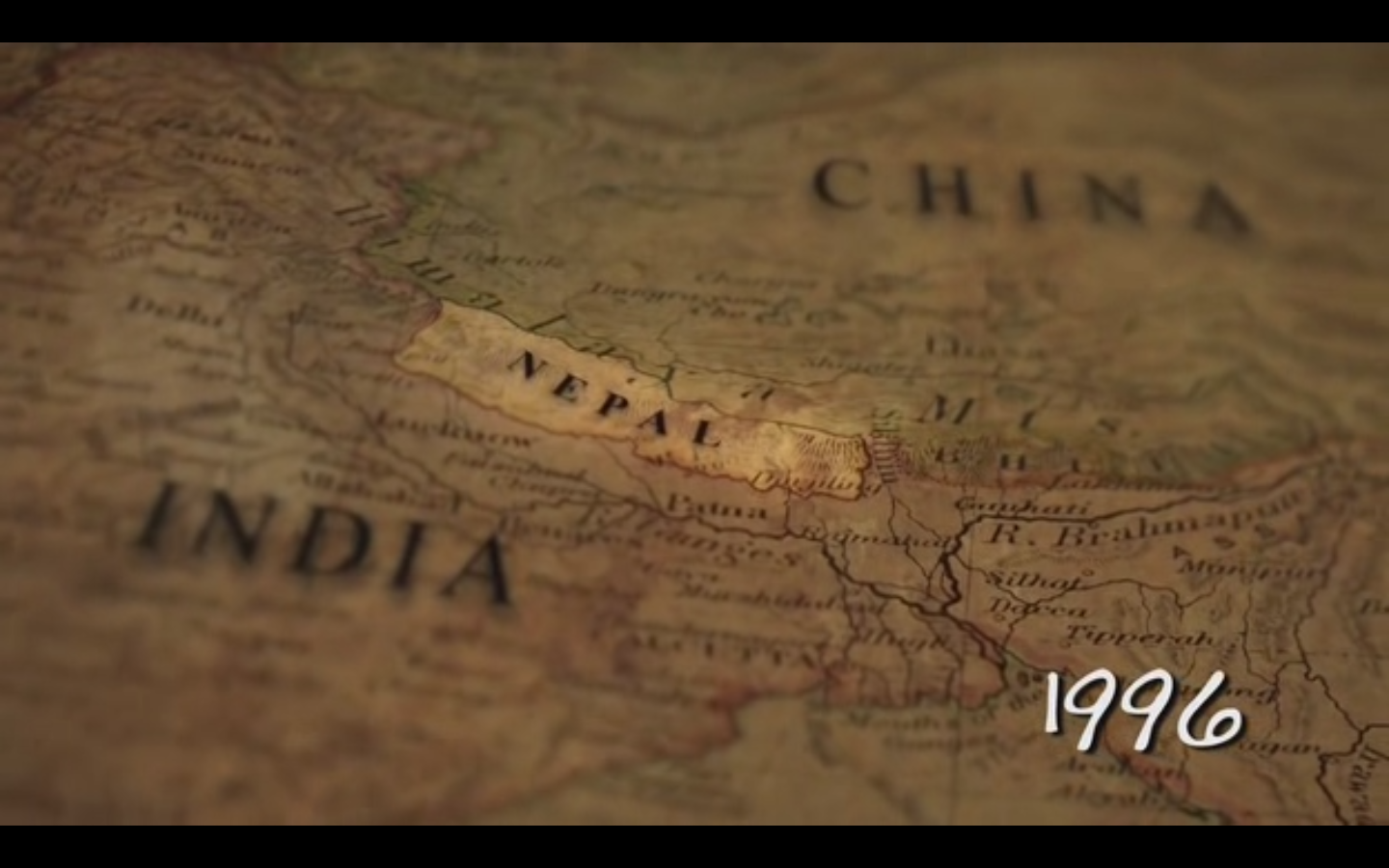
Nepal

Woman Rebel is a short documentary that aired on HBO in 2010 that follows a woman named Uma Bhujel during her times as a Maoist rebel in Nepal. Throughout the film Bhujel (whose codename in the military is “Silu”) describes the various aspects of the experience of fighting the war. Early on, while being introduced to her family, we learn that her brother had joined the Royal Army. This framework makes her story a sad “classic case” of civil conflict splitting a family. Although unlike the cliche “brother vs brother” notion, Nepal’s Maoist rebels are composed of 40% women and are trying to fight gender inequality in Nepal and this departure from the cliche represents how important gender is not only for the conflict’s impact on Uma’s family, but for Nepali society.

The rebellion itself is not shown as the result of an ideological battle (although this is implied to an extent in the Maoists calling for and end to the class inequality). Rather, the conflict is shown in the backdrop of a deeply unequal and unjust society where people are rising up, for example a story of a woman who committed suicide after her husband’s family (in which the marriage was prearranged) treated her poorly is used to highlight the gendered inequality that exists in Nepali society. There are none of the anti-Communist declarations or cautions that we would find if this were to appear as a history channel show which makes the film a refreshing look at a contentious issue.

A Maoist fighter and her child

The director of the film claims that she wants the viewer to “see a portrait” of a fighter in a complex struggle. She also claims that the film is meant to “focus on agents of change instead of victims of circumstance.” This intention is quite important, as it portrays those living in the Global South not as helpless victims that are just in need of help from Western NGO’s and “freedoms” but rather that those very impoverished people have the ability to mobilize and get what they want directly.

Overall, the film is an interesting look into the conflict that is not covered often in Western media which ended the long standing monarchy of Nepal and established a republic. There have been continued issues with the pace and nature of social change in the country (of which are out of the scope of this film review), but the most important part of this film is that it shows the conflict through the lens of a fighter who sees her struggle as part of a movement for social justice. The structure of the short film keeps it interesting the whole way through, with stock footage of the conflict going back to the 1990s to the contemporary countryside. It serves as an excellent introduction to those unfamiliar with the conflict, and for those familiar it is a way to promote education and discussion about the issue.


All That Is Solid Melts Into Air (2008)

Director: Mark Boulos

All That Is Solid Melts Into Air is a short film by Mark Boulos that contrasts the excesses of capitalism in the depiction of the Chicago Mercantile Exchange with one of the most exploited parts of the world, the Niger Delta. The brokers in Chicago passionately trading oil futures are contrasted with members of the Movement for the Emancipation of the Niger Delta, which is a militant movement in the region to resist companies like Royal Dutch Shell and for expropriation of that oil wealth.

The title of the short film/project comes from a line from The Communist Manifesto. The dialectical nature of such a contrast (two screens directly facing each other showing two extreme ends of capitalism) could not be any clearer. The mere existence of what each screen depicts demonstrates a contradiction of the system of global capital: the dispossession of people from their own resources and land and the foreign ownership of it.

This exhibit/short film is straight forward and to the point and should be a starting point of conversation about neo-colonialism and the continued attempts by the West to dominate places like Africa and the Global South in general. The simultaneous format of the exhibit is an example of how dialectical reasoning can be utilized in art to build consciousness and display methods of resistance.

At the time of this writing the exhibit is on display at the MoMA

The Hunger Games (2012)

Spoilers may follow (as this is a current release)

Director: Gary Ross

The "Reaping"

The Hunger Games is a film adaptation of a novel of the same name that takes place in a post-apocalyptic dystopian universe. The premise revolves around a violent competition between various “districts” that had risen up against the Capitol and failed over 70 years prior to the film. Two contestants (one boy and one girl) are chosen from the 12 districts each year to compete to the death in what is called the Hunger Games. The games are a media spectacle that both represent the spectacle of war and TV game shows. This is no coincidence as the author of the books (who also co-wrote the screenplay) even cited the influence of the book as what she saw as the similarities of reality TV and the 2003 US invasion of Iraq.

The two main characters (Katniss Everdeen and Peeta Mellark) come from what is implied to be Appalachia, and the coal mining roots of their district are made quite evident. Images of the district show that not much has changed for this Appalachian district, poverty is still quite evident and the Capitol’s extracting of two contestants for the games demonstrates their power over the district. Before she knows she will be a competitor in the games, Katniss has a conversation with a friend of hers about the games where he argues that if people “just stopped watching them” that the games would just stop; and Katniss responds by essentially writing off the idea off as naive. This sort of acknowledgement of the naivety of such a statement demonstrates how obvious it should be to us as viewers of the film and to the oppressed districts what the Hunger Games represent: the domination of the districts by the Capitol. Later on and throughout the film, a love interest is developed between Katniss and Peeta. This interest is portrayed as a complex mix of genuine interest and manipulation by the state as a method of controlling the population by giving them a media love interest that they can have hope in. This is a parallel to the “celebrity culture” that is quite prevalent in the United States, whereas in the film, the culture is being intentionally promoted as a means of making the masses passive.

Unfortunately the games themselves, which make up a big part of the film, do not contain as much social commentary as they could have. This is perhaps why Roger Ebert commented that the film “avoids the opportunities sci-fi provides for social criticism.” I think his observation that the film avoids such social commentary may be a bit strong, considering the entire world itself is set up as a critique of imperialism and oppression as well as portraying rebellion and revolt in positive ways (which is hardly a standard plot device for a Hollywood blockbuster these days).

The universe of Hunger Games is a mix of an Orwellian style authoritarian rule over oppressed districts and a depiction of a “decedent” society of wealth and fascination with game show/reality television. The contrast between the bleakness of District 12 and the need for its very existence to be at the service of the wealthy Capitol is perhaps a more honest commentary on a world where mass wealth exist and depend on abject poverty. Thus the very setup of the film is a commentary, although it is certainly lacking in terms of some depth. For example, when a rebellion is depicted in one of the districts during the games: the nature of that district and who are the protagonists of the rebellion are not elaborated.

Katniss Everdeen played by Jennifer Lawrence

Resistance of the oppressed takes various forms in the film. The most obvious being the rebellion that occurs during the games. But perhaps more subtle is the very end where it is announced that one of the “tributes” from District 12 must kill the other. Katniss decides that they ought to both take their lives instead, which would itself be a “final act of resistance” that ends up saving both of their lives. The complex play between their relationship, their resistance to the Capitol, and their origins in what is perhaps one of the more oppressed districts is a nice overview of how complex systems of exploitation and oppression really are.

There remains the question of “is The Hunger Games a left wing film?” Unlike the Cyberpunk Review, this website does not list the “degree” that a film is left wing. Instead films should be viewed for what they “bring to the table” overall. For example, Avatar was an interesting case of what could be considered an anti-imperialist film becoming one of the best selling of all time, yet it had significant problems of how race was depicted. Hunger Games certainly deals with various issues that ought to be of interest to leftists and progressive folks in general. While more obscure films have more room for being more faithful to revolutionary theory and history (and certainly have an important place in film), perhaps there is something more subversive about a blockbuster that deals with the nature of rebellion and control that is quite important as well.